
Far south Chile
The rock that ended the easy way around
Cape Horn marks the last island-tip of the Tierra del Fuego archipelago, a basalt and weather monument where westerlies, ice reports, and ocean swell built a reputation that still shapes nautical language. For centuries sailing ships rounding from Atlantic to Pacific risked dismasting, ice, and the long way south when the Strait of Magellan or later the Panama Canal were closed, blocked, or not yet invented. The Horn became shorthand for the hardest commercial passage on earth — and for the graveyard of ships that misjudged the Drake Passage edge.
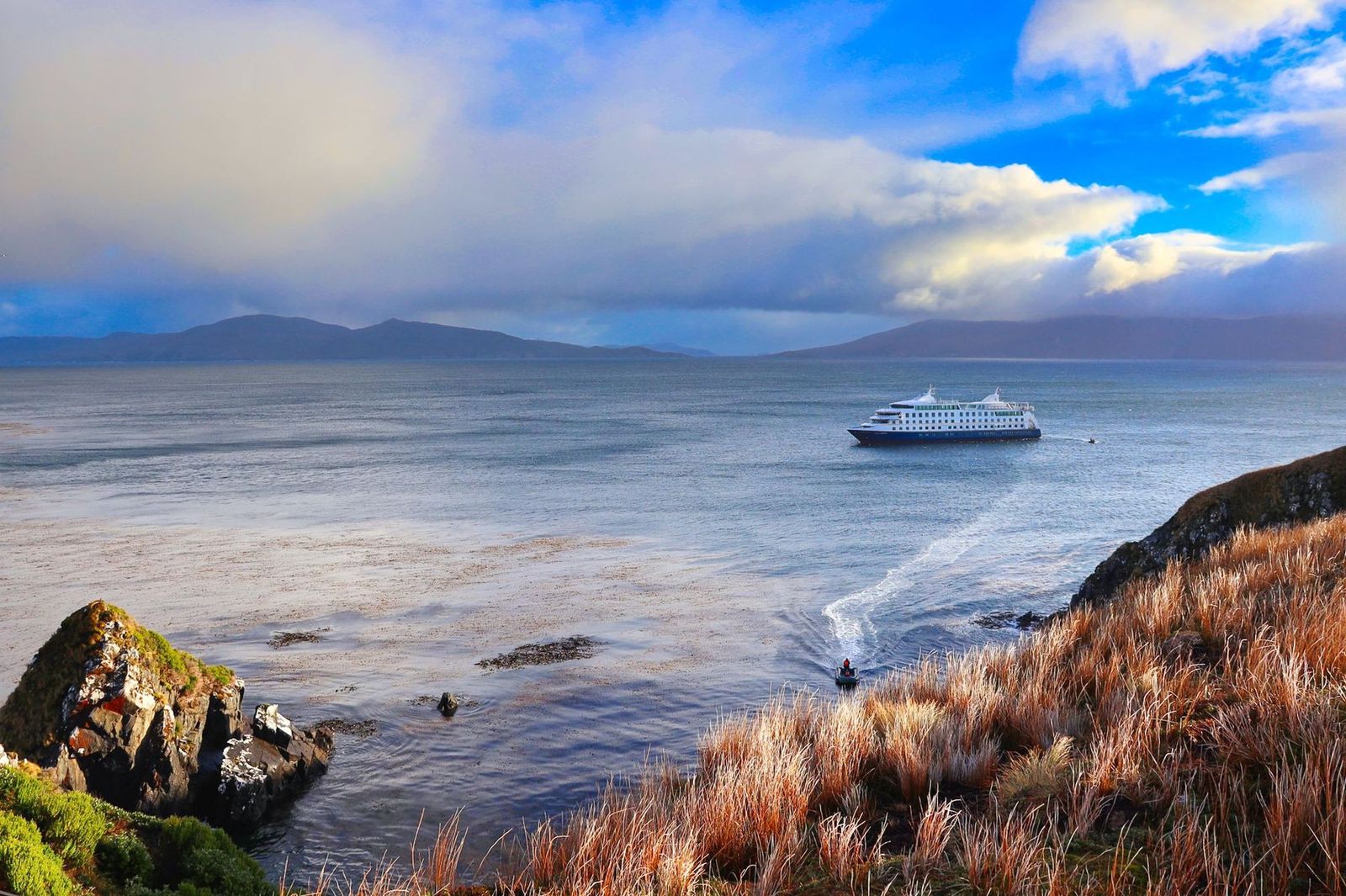
Chile administers the headland within Cabo de Hornos National Park and the wider Cape Horn Biosphere Reserve, a wilderness of peat, scrub, and seabird cliffs more than a town. A small monument and chapel exist for those rare calm days when expedition vessels put people ashore; albatross, petrels, and the sheer scale of water are the usual show from the rail. Antarctic cruise and deep Patagonia itineraries use the Horn as a narrative hinge between Beagle Channel intimacy and open Drake water.
Cruise marketing sometimes implies a casual Cape Horn ‘stop’ like any other port day. Guests who plan gift shops and timed photo queues miss the product: cold air, moving deck, and a rock that may stay on the horizon. Honest calls celebrate the sail-by, keep binoculars ready, and treat any landing as a bonus cancelled by swell — never as the centrepiece of a South America city circuit.
Claim a windward rail in proper layers. There is no Cape Horn town day to invent.
Aboard / ashore
What to do with the time you have
- 01
Claim a windward rail with real layers
The call is outdoor deck time when spray and wind allow — waterproof shell, hat strap, and gloves beat a phone held in bare hands. Move between lee and view rather than camping in one exposed spot until you shiver. This is the essential Cape Horn hour and the only plan that works when landing is off.
- 02
Watch for albatross and petrel traffic
Southern Ocean seabirds often work the wake and swell lines around the Horn. Binoculars repay the cold better than another indoor lecture. Keep a soft knees stance on a moving deck and never lean beyond rails for the shot.
- 03
Attend the expedition or bridge commentary
When naturalists or officers narrate the rounding, use it — history, ice notes, and naming lore beat guessing which rock is which in fog. Sit or stand where you can still glance outside. Commentary is context; the rail is still the main stage.
- 04
Photograph the monument rock only if visibility opens
Clear windows are brief. Shoot when the headland resolves, then put the camera away before fingers fail. Do not invent a second scenic circuit inland — there is no inland café grid waiting beyond the cliffs.
- 05
Zodiac landing only if offered and confirmed
A rare shore party to the monument or boardwalk exists on some expedition ships in flat water. Go only with staff briefings, lifejacket discipline, and a willingness to abort on the beach. Treat landing as lottery luck, not a prepaid city tour.
- 06
Use indoor warmth as a reset, not the day
Warm drinks and a dry lounge keep you functional between deck shifts. Rotate people so someone is always watching the light change. Living entirely indoors wastes the only reason the itinerary bent this far south.
- 07
Skip inventing a ‘Cape Horn town day’
There is no substitute port stroll to stack with Ushuaia shopping lists on the same morning. Accept scenic honesty. Brochure language that sounds like a harbour market day is the fastest path to disappointment at 56 degrees south.
Keep these
What's worth doing
Horn headland sail-by
The rock and swell from a safe deck rail.
Southern Ocean seabirds
Albatross and petrels on the wake.
Cabo de Hornos park context
Wilderness reserve — landing rare.
Drake / Antarctic approach
Open-water hinge on deep-south routes.
Before you sail
Weather veto, layers, no pier fantasy
- Assume no landing unless the captain and expedition team explicitly confirm a zodiac window — swell, williwaws, and fog cancel shore plans here more often than any Caribbean shower delay you have met before.
- Cold plus wind steals heat fast on open decks; pack a true waterproof shell, warm mid-layer, gloves, and a way to secure hats and phones, and rotate inside before shivering becomes the only memory of the Horn.
- Do not schedule Cape Horn like Puerto Montt or Valparaíso. This is scenic and Antarctic-approach theatre: rail time, birds, and weather honesty beat any fantasy of shops, taxis, or a timed monument queue on dry pavement.
Who calls
Ships that stop at Cape Horn
Tap a ship to compare UK cruise-only prices for that vessel in the months it calls here.
2026
2027
- Carnival FirenzeCarnival Cruise LineJanuary 2027
- Celebrity EquinoxCelebrity CruisesJanuary–December 2027
- Queen AnneCunardJanuary–February 2027
- EuropaHapag-Lloyd CruisesJanuary 2027
- Nieuw AmsterdamHolland America LineOctober–December 2027
- OosterdamHolland America LineJanuary–March 2027
- ZaandamHolland America LineJanuary 2027
- Majestic PrincessPrincess CruisesOctober–December 2027