
Languedoc coast
A purpose-built port that learned to live on water
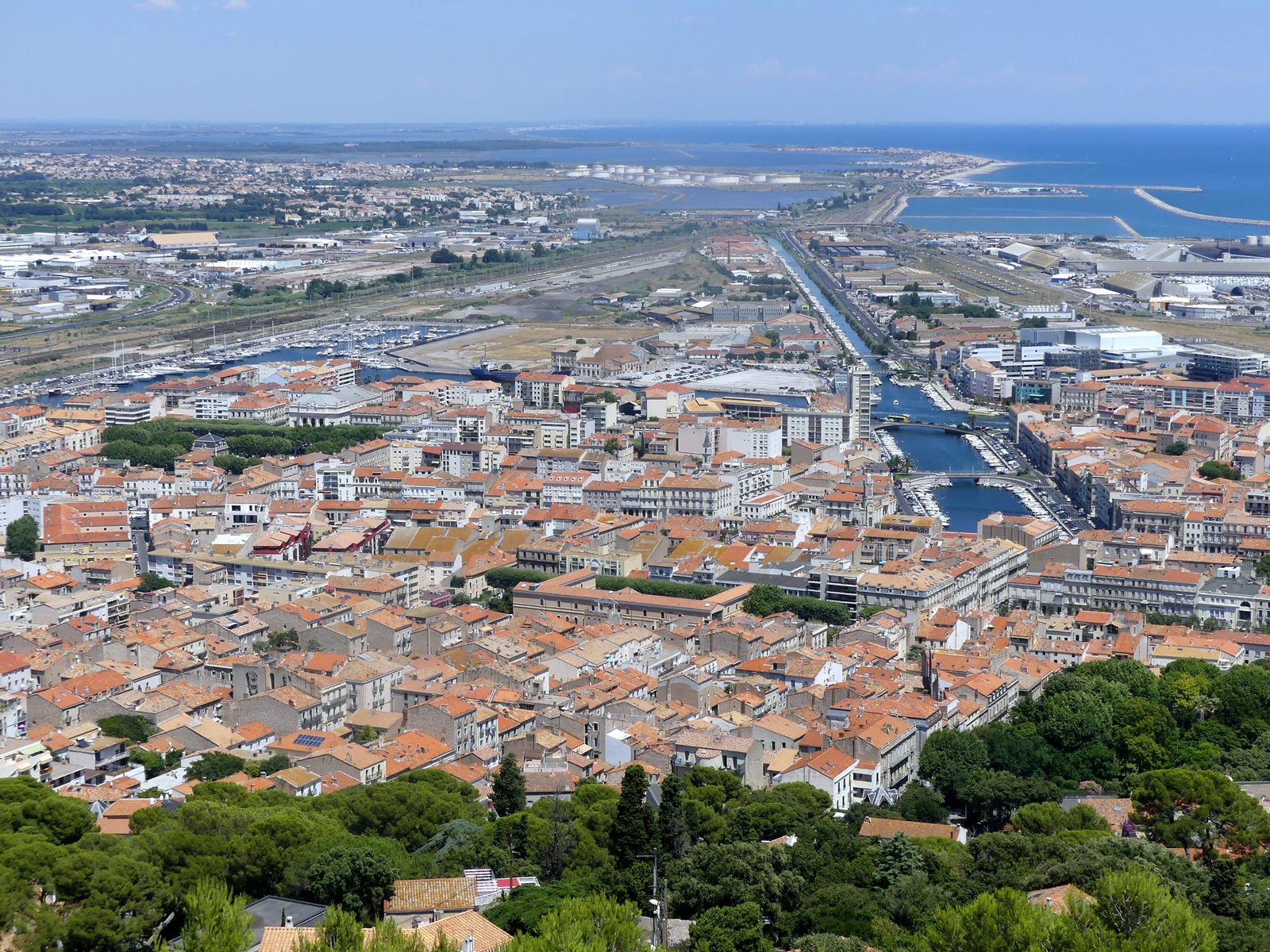
Sète was shaped as a deep-water outlet for Languedoc trade, later tied to the Canal du Midi and the Rhône-to-Sète waterways that still thread the lower town. Unlike older Riviera resorts painted for leisure, this place grew around fishing, freighters, and the need to move wine and goods to sea. The grid of canals is not scenery bolted on — it is how the town breathes, with bridges, quayside houses, and working basins sharing the same water as café terraces.
Mont Saint-Clair watches the harbour and the wide Étang de Thau lagoon inland, a height used for views, a cemetery of poets and guests, and the orientation that explains why Sète sits between open Mediterranean and oyster-rich inland water. Water jousting on the canal — the famous joutes — became a local ritual of summer festivals, while seafood and tielles (octopus pies) fixed the town’s culinary signature. Paul Valéry’s link to the hill cemetery still draws literary pilgrims who also want the panorama.
Cruise itineraries treat Sète as a Languedoc sample rather than a full Occitanie survey. The smart day is canals, waterfront markets, and either the Mont Saint-Clair climb or a focused lagoon tasting — not Montpellier, Agde, and every beach stacked before dinner. Short calls belong to the harbour town itself; long calls still force an honest either/or once you leave the canal grid.
Canals first. The hill is the altitude prize when legs agree.
Ashore
Canals, hill, lagoon, or beach
- 01
Walk the canals and central quays
Start along the Royal Canal and harbour edge for bridges, fishing boats, and the town’s working rhythm without a coach. Pause for coffee where shade falls on the water. This is the essential Sète hour and the safest plan when tenders or short calls leave little margin for inland experiments or beach taxis.
- 02
Climb Mont Saint-Clair for the wide view
Taxi or walk up to the summit terrace and cemetery approaches for Mediterranean, lagoon, and rooftop sweep in one turn. Go early to dodge heat haze and coach bunches. The view is the point — if knees protest, trade the climb for a longer canal and market morning without guilt.
- 03
Seafood lunch and a tielle if you find one
Sit for mussels, oysters from the Étang, or the local octopus pie rather than racing three villages on an empty stomach. One focused meal beats a checklist of every quay restaurant. Confirm catch calmly; the point is Languedoc harbour cooking, not photographing every plate before you walk.
- 04
Étang de Thau tasting stop on a long call
A short hop to oyster beds or a lagoon village shows why inland water matters as much as the open sea here. Book or taxi with a locked return time. Treat this as your nature-and-taste headline, not a warm-up before Montpellier and a beach circuit.
- 05
Corniche and beach time if the swim clock allows
The corniche road and sandy stretches south of town deliver easy Mediterranean light after the canals. Swim only with a hard all-aboard buffer written down. These beaches are the pay-off when the harbour stroll is done — not a morning replacement for the canal grid itself.
- 06
Market colour in cooler hours
Central market halls and quayside stalls repay an unhurried loop for fruit, fish, and picnic supplies. Keep valuables close and exit with a plan for the hill or lagoon rather than shopping until panic. Shade and early timing matter in summer when quay glare pushes everyone indoors by early afternoon.
- 07
Skip Montpellier-plus-everything
Montpellier’s old centre is excellent on a land trip and poor once Sète’s own canals, hill, and lagoon already fill the day. Stay with harbour depth plus at most one extra. Brochure stacking is how guests see coach windows instead of canal stone and still sprint for the gangway.
Keep these
What's worth doing
Canal quarter
Working waterways and bridges through the town.
Mont Saint-Clair
Hill panorama over harbour and lagoon.
Étang de Thau
Oyster lagoon inland — timing required.
Corniche beaches
Sandy Mediterranean edge south of the port.
Before you sail
Canals, climb and either/or choices
- Berths put you close to the canal grid; Mont Saint-Clair and Étang villages need extra time, water, and a willingness to climb or taxi in heat that slows everyone by early afternoon on summer calls.
- Jousting festivals and market mornings change street flow — ask on the quay what is open, and keep a return buffer before you commit to lagoon tastings or beach swims that look close on a map and stretch in traffic.
- Treat Montpellier and far-beach circuits as alternatives to a deep Sète day, not free extras. A short call belongs to canals and waterfront; long calls still force an honest either/or if you want the hill and the lagoon both.
Who calls
Ships that stop at Sete
Tap a ship to compare UK cruise-only prices for that vessel in the months it calls here.
2026
- Celestyal DiscoveryCelestyalNovember–December 2026
- Crystal SerenityCrystalSeptember 2026
- Oceania AlluraOceania CruisesOctober 2026
- Oceania MarinaOceania CruisesNovember 2026
- Oceania SirenaOceania CruisesOctober 2026
- Seven Seas NavigatorRegent Seven Seas CruisesAugust–December 2026
- SeaDream IISeaDream Yacht ClubSeptember 2026
- Silver ShadowSilverseaAugust 2026
2027
- Azamara OnwardAzamaraJuly 2027
- Celestyal DiscoveryCelestyalNovember–December 2027
- Oceania AlluraOceania CruisesApril–October 2027
- Oceania AureliaOceania CruisesJune–August 2027
- Oceania InsigniaOceania CruisesAugust–September 2027
- Oceania NauticaOceania CruisesJune–August 2027
- Seven Seas VoyagerRegent Seven Seas CruisesApril–October 2027
- Seabourn OvationSeabournMarch–July 2027
2028
- Azamara QuestAzamaraSeptember 2028
- Celestyal DiscoveryCelestyalJanuary–February 2028
- EuropaHapag-Lloyd CruisesJune 2028
- Europa 2Hapag-Lloyd CruisesSeptember 2028
- Oceania AlluraOceania CruisesFebruary–October 2028
- Seven Seas VoyagerRegent Seven Seas CruisesSeptember 2028
- Viking JupiterVikingMay–October 2028
- Viking LibraVikingJanuary 2028