
Caithness
A North Sea harbour built for ferries and far weather
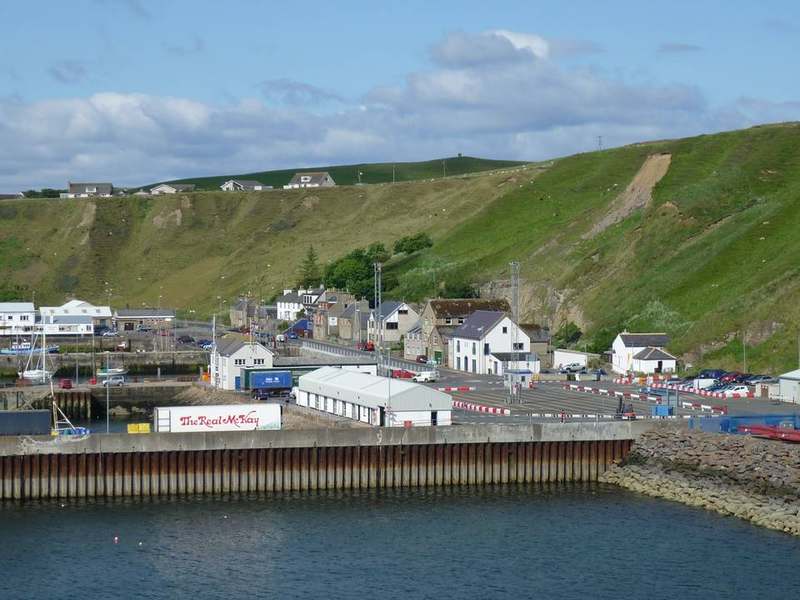
Scrabster sits on Thurso Bay in Caithness as the mainland’s practical door to Orkney ferry traffic and a deep-water harbour that cruise ships use when far-north itineraries want mainland cliffs without a city berth. Viking place-names, fishing, and nuclear-era Dounreay employment shaped modern Caithness beside older crofting and flagstone industries. The landscape is big-sky and horizontal — peat, cliff, and Atlantic-edge light more than Highland glen postcard clichés.
Thurso’s grid streets, beach, and Caithness Horizons museum give the easy town map a short transfer from the pier. Dunnet Head claims mainland Britain’s northernmost point; the Queen Mother’s Castle of Mey sits inland as a softer heritage stop. John o’ Groats remains a tourist punctuation mark rather than a cultural climax — useful for photographs, thin as a whole-day plan.
Cruise days succeed with Thurso orientation plus one headland or castle choice under waterproof discipline. They fail when guests demand Orkney’s Neolithic sites, Dunnet, Mey, and a full whisky fantasy before all-aboard. Scrabster rewards Caithness honesty: ferry-harbour air, one far-north viewpoint, and layers against horizontal rain. Cruise guests who treat the call as one clear choice — walk, viewpoint, or single timed outing — leave with a place remembered rather than a blur of transfers and brochure promises that never fitted the clock.
Thurso and one headland. Orkney is a different day.
Ashore
Thurso, Dunnet, Mey, or skip the stack
- 01
Thurso town and river mouth
Walk Thurso’s streets and beach edge for Caithness town scale after the harbour hop. Café pause once, then move. This is the essential soft landing when cliff roads look fogged or wind-closed. Keep valuables minimal, watch the ship’s recall time, and prefer one finished circuit over a half-seen stack of stops that only looked close on the map.
- 02
Dunnet Head viewpoint
Transfer to mainland Britain’s northernmost headland for cliff drama and Orkney-on-the-horizon views when cloud lifts. Layers and careful footing matter. Treat Dunnet as your scenic headline — not a warm-up before Mey and John o’ Groats both.
- 03
Castle of Mey gardens and exterior
Choose the Queen Mother’s castle for gardens and royal-Caithness story as a sheltered heritage alternative. Confirm opening hours. Soft plan when pure cliff walks feel too exposed. Keep valuables minimal, watch the ship’s recall time, and prefer one finished circuit over a half-seen stack of stops that only looked close on the map.
- 04
John o’ Groats photo stop only
A quick landmark photo works if you already chose Dunnet or Mey as the main outing and still have buffer. Do not build the whole day around the signpost. Gift shops are optional; the headland wind is the real product inland of Scrabster.
- 05
Caithness museum hour in Thurso
Indoor heritage explains flagstone, fishing, and nuclear-neighbour history when rain saturates outdoor hopes. Give it focus. Useful pivot that still keeps you close to the ship. Keep valuables minimal, watch the ship’s recall time, and prefer one finished circuit over a half-seen stack of stops that only looked close on the map.
- 06
Scrabster harbour and ferry watching
Stay near the working quay for Orkney ferry theatre and seabird edges if mobility or weather limits inland travel. Pair with Thurso rather than trying to add a third distant stop. Keep valuables minimal, watch the ship’s recall time, and prefer one finished circuit over a half-seen stack of stops that only looked close on the map.
- 07
Skip Orkney-plus-every-headland
A full Orkney Neolithic day and multiple Caithness cliffs will not share one Scrabster call calmly. Pick mainland depth or a dedicated ferry excursion — not both plus castle tea. Brochure stacking wastes the far north.
Keep these
What's worth doing
Thurso town
Short hop — streets, beach, museum.
Dunnet Head
Northern mainland cliffs — weather ruled.
Castle of Mey
Gardens and heritage — timed visit.
John o’ Groats
Signpost photo — not a whole day.
Before you sail
Horizontal rain, one headland and ferry truth
- Caithness weather is famous for wind-driven rain that soaks denim in minutes — waterproof trousers, a hooded shell, and spare dry gloves turn a miserable quay into a workable far-north day.
- Confirm opening hours for Castle of Mey and museum desks before you leave the pier; rural Caithness does not run on Mediterranean café clocks, and taxis need pre-agreed returns.
- Orkney’s stones deserve their own ferry day. Treat Dunnet, Mey, and John o’ Groats as alternatives around a Thurso base, not a free quartet after a late start from Scrabster harbour.
Who calls
Ships that stop at Scrabster
Tap a ship to compare UK cruise-only prices for that vessel in the months it calls here.